3D-Printed Tactile Keyboard & Stand for Children with CVI
Custom assistive typing solution combining tactile feedback and ergonomic design to support children with Cerebral Visual Impairment (CVI) in achieving greater accessibility.
Project Overview
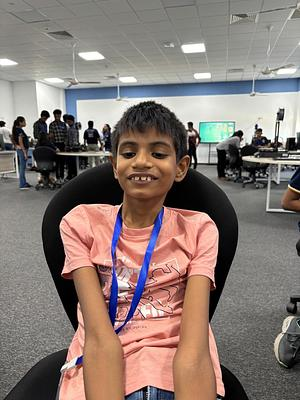
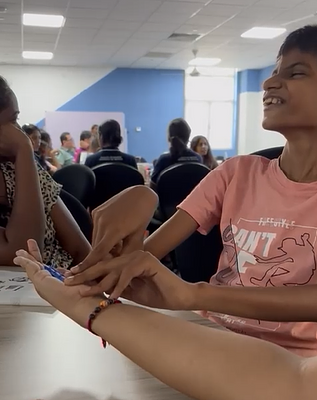
Developed during the Sri Lanka Inter-University 3D Printing Make-A-Thon 2025, this project aimed to support Joel, a 10-year-old child with Cerebral Visual Impairment (CVI), by enhancing his typing experience through accessible design. The team emerged as Champions after three days of rapid ideation, user-focused design, and iterative prototyping.
The solution includes two main components:
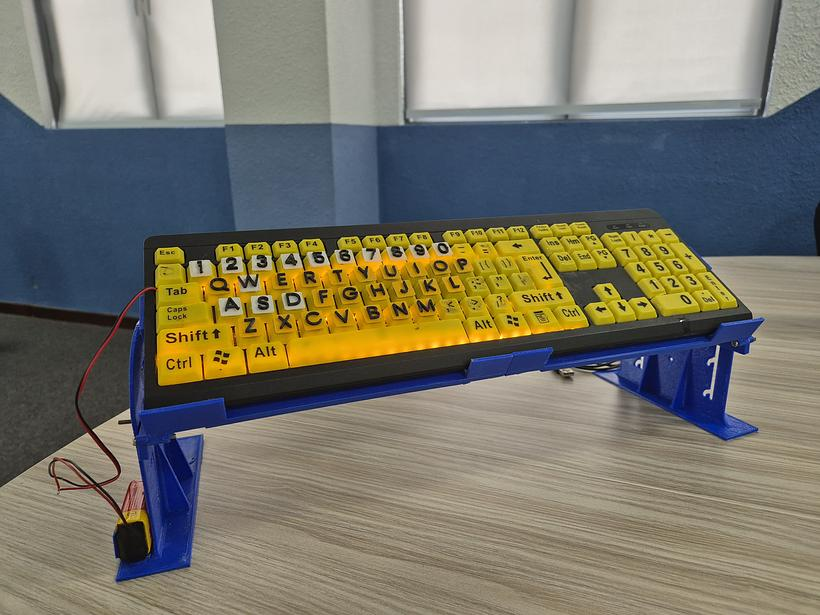
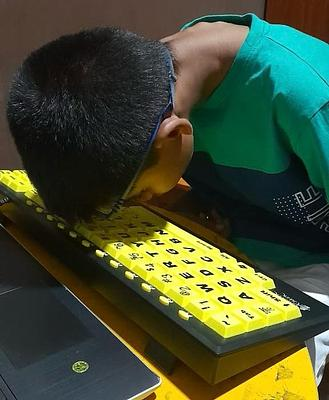
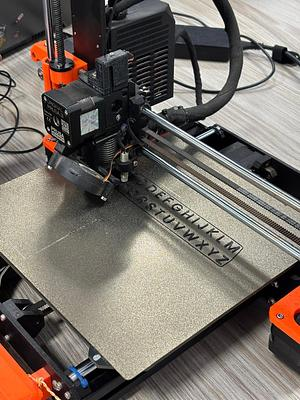
1. Tactile Keyboard Accessory – A set of 3D-printed, high-contrast key tiles with embossed letters, allowing Joel to feel and recognize keys without relying heavily on visual input. This reduced neck strain and allowed him to type independently.
2. Adjustable Keyboard Stand – A lightweight, stable platform designed in SOLIDWORKS with adjustable tilt and height features, enabling a more ergonomic typing posture for users with visual processing challenges.
Prototypes were tested directly with Joel, and his feedback shaped key improvements such as easier-to-read embossed labels and more durable materials. The final product demonstrated the power of human-centered design in creating functional and meaningful assistive devices.
Key Features:
- Designed embossed tactile key overlays to enhance typing through touch
- Engineered an ergonomic stand using SOLIDWORKS with modular adjustment points
- Iteratively prototyped using TPU and PLU filaments across three design stages
- Conducted direct usability testing with Joel, who confirmed ease and comfort
- Prioritized inclusivity and adaptability for future CVI or low-vision users
- STL files of key components made publicly available for replication and customization
This project emphasizes how empathy-driven engineering and rapid fabrication can empower children with visual impairments to engage with technology more independently and confidently.
Awards & Recognition
Won the first-ever Sri Lanka Inter-University Make-A-Thon for 3D-Printed Assistive Medical Technology, organized by the University of Kelaniya and co-organized by FabLab Shinagawa